
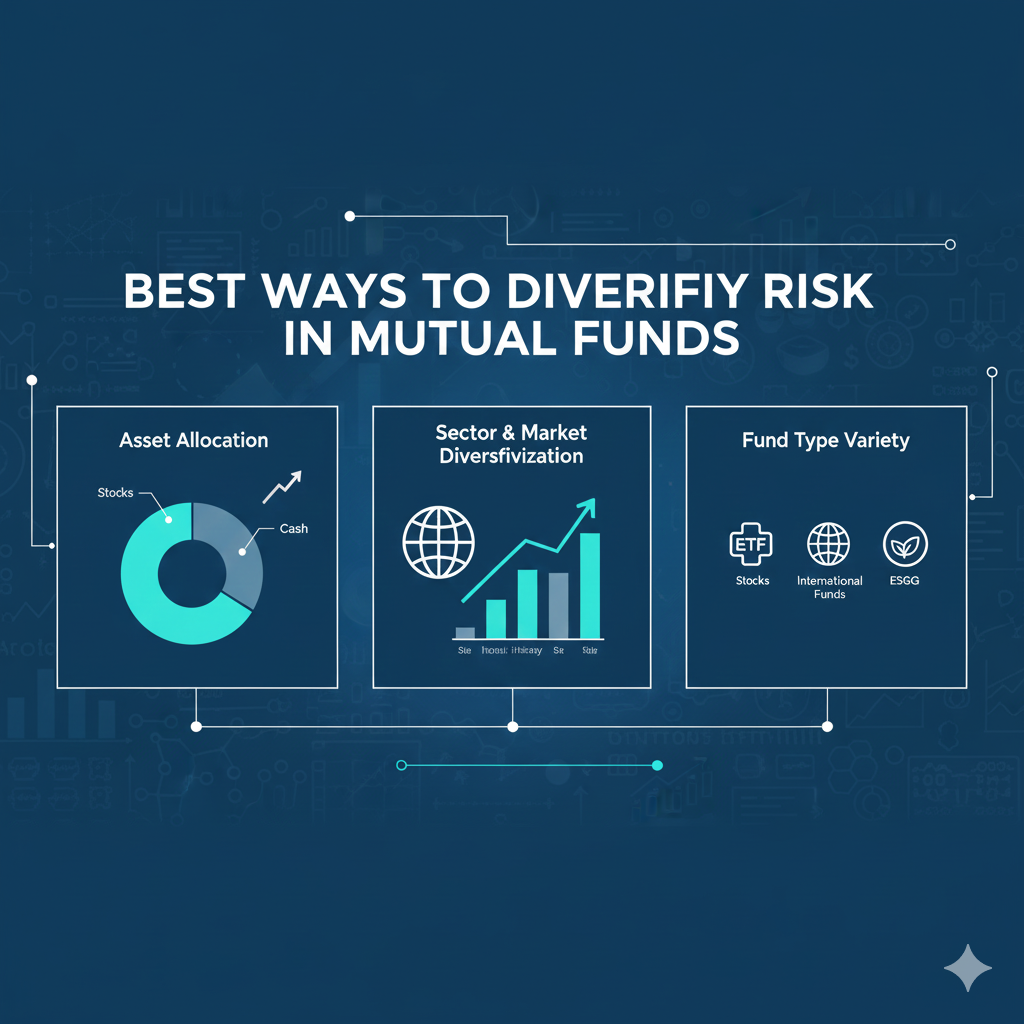
1️⃣ Invest Across Different Fund Categories
Don’t put all your money in just one type of mutual fund.
- 🟦 Large-cap funds → Stable & lower risk
- 🟨 Mid-cap funds → Moderate risk & good growth
- 🟥 Small-cap funds → High risk & high return
- 🟩 Hybrid funds → Mix of equity + debt for balance
- 🟧 Sectoral funds → High risk, only small allocation
This spreads risk across market segments.
2️⃣ Use SIP Instead of Lump Sum
- 🧩 SIP spreads investment over time
- ⏳ Helps average out the market ups and downs
- 📉 Reduces the risk of entering the market at the wrong time
3️⃣ Avoid Over-Concentration in One Sector
Don’t invest heavily in only:
- 🏦 Banking
- 🏗️ Infrastructure
- 💊 Pharma
- 💻 Tech
Sector concentration increases risk if that sector crashes.
4️⃣ Add Debt Funds for Stability
Mix some debt mutual funds to protect your capital:
- 🟫 Short-duration debt funds
- 🟪 Corporate bond funds
- 🟩 Liquid funds
Debt lowers volatility during market falls.
5️⃣ Choose Funds from Different AMCs
- Don’t invest everything in one mutual fund company
- Different fund houses have different strategies
- 🏦 Helps reduce fund manager–specific or AMC-specific risk
6️⃣ Invest with a Long-Term Horizon
- 📆 3–5+ years helps reduce short-term volatility
- 📉 Markets fluctuate, but long term smooths out risks
7️⃣ Rebalance Your Portfolio Regularly
- 🔁 Review every 6–12 months
- Move profits from overheated segments into safer segments
- Keeps your risk under control
8️⃣ Don’t Chase Only High Returns
- 🚫 High return = high risk
- 🧠 Look for stability, consistency, and long-term performance
⭐ Ideal Diversified Portfolio Example
(Just an example, not financial advice)
- 🟦 40% Large Cap Fund
- 🟨 25% Mid Cap Fund
- 🟥 15% Small Cap Fund
- 🟩 10% Hybrid Fund
- 🟫 10% Debt Fund