

Limitations of a Mutual Fund ⚠️📉
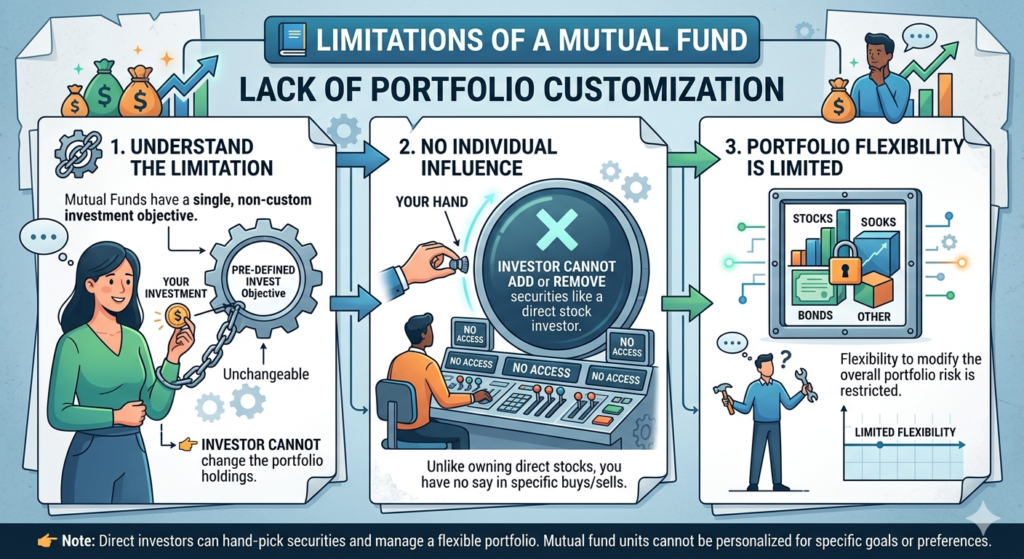
1. Lack of Portfolio Customization 🎯❌
- You cannot choose individual securities
- Fund manager decides everything 👨💼📊
- May not match your exact preferences ⚖️
2. No Control Over Decisions 🚫🧠
- Investors have no say in buy/sell decisions
- You must trust the fund manager completely 🤝
3. Costs and Fees 💸📉
- Includes expense ratio, management fees, etc.
- These charges reduce your overall returns 📊⬇️
4. Over-Diversification 🌍⚖️
- Too much diversification can limit high returns
- Gains from strong stocks may get diluted 📉
5. Lock-in Period (in some funds) 🔒⏳
- Some funds like ELSS have a 3-year lock-in
- You cannot withdraw money during this period 🚫💰
6. No Guaranteed Returns 📉❗
- Returns depend on market performance 📊
- Risk of loss is always present ⚠️
7. Taxation at Exit 🧾💼
- You must pay capital gains tax when redeeming
- Tax rules vary for equity and debt funds 📘
8. Misleading Past Performance 📊⚠️
- Past returns may look attractive
- But future performance is not guaranteed 🔮❌
9. Manager Risk 👨💼⚠️
- Performance depends on fund manager’s decisions
- Poor decisions can reduce returns 📉
10. Delay in Transactions (NAV-based pricing) ⏳📅
- Transactions happen at end-of-day NAV
- You don’t get real-time price like stocks 📊
11. Limited Flexibility 🔄❌
- Cannot quickly react to market changes
- Less flexible compared to direct investing
In Short 📝
Mutual funds offer professional management and convenience, but come with limited control, costs, and market risks ⚖️📉