
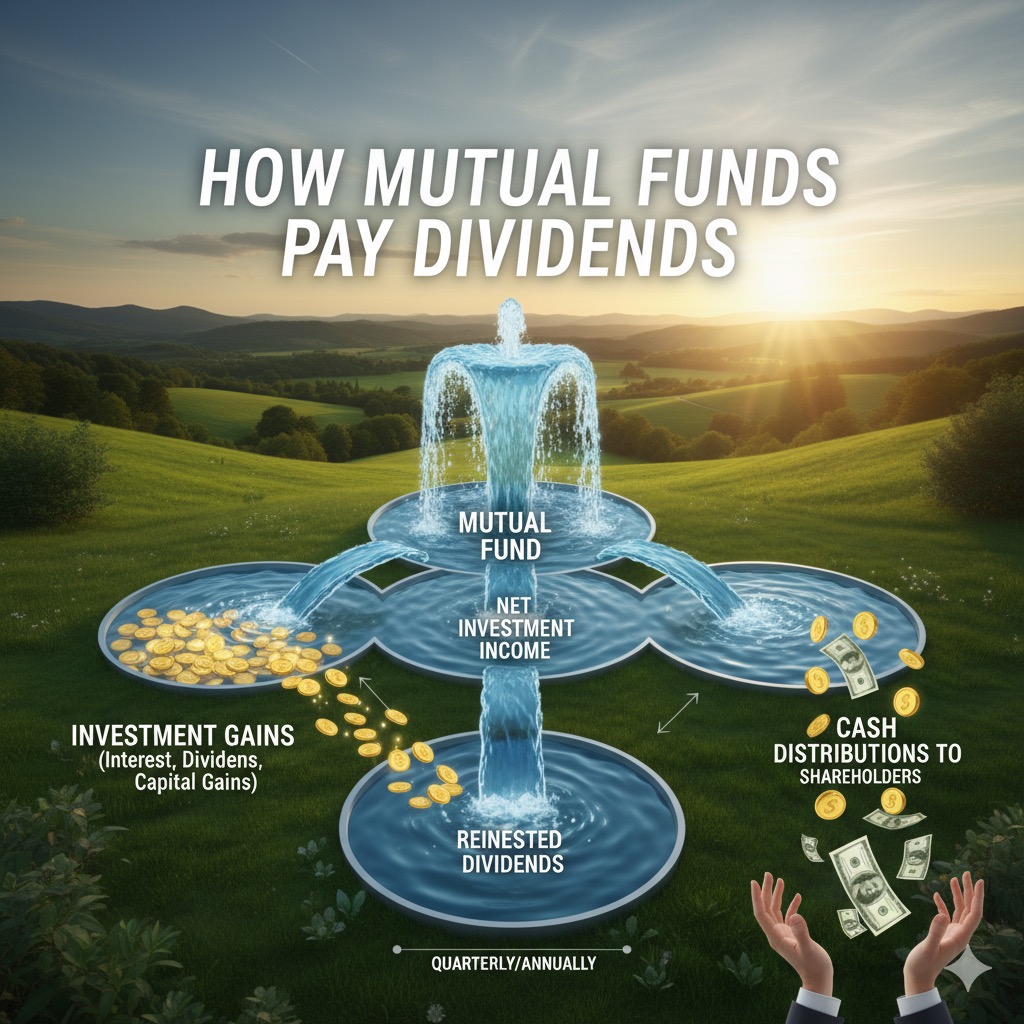
Mutual funds hold a portfolio of assets such as stocks, bonds, and money market instruments. These assets generate income. The fund collects that income and then distributes it to investors.

✅ 1. Fund earns income
Mutual funds receive:
- Dividends from stocks 🏢💰
- Interest from bonds 💵📈
- Capital gains when they sell securities at a profit 🔄📊
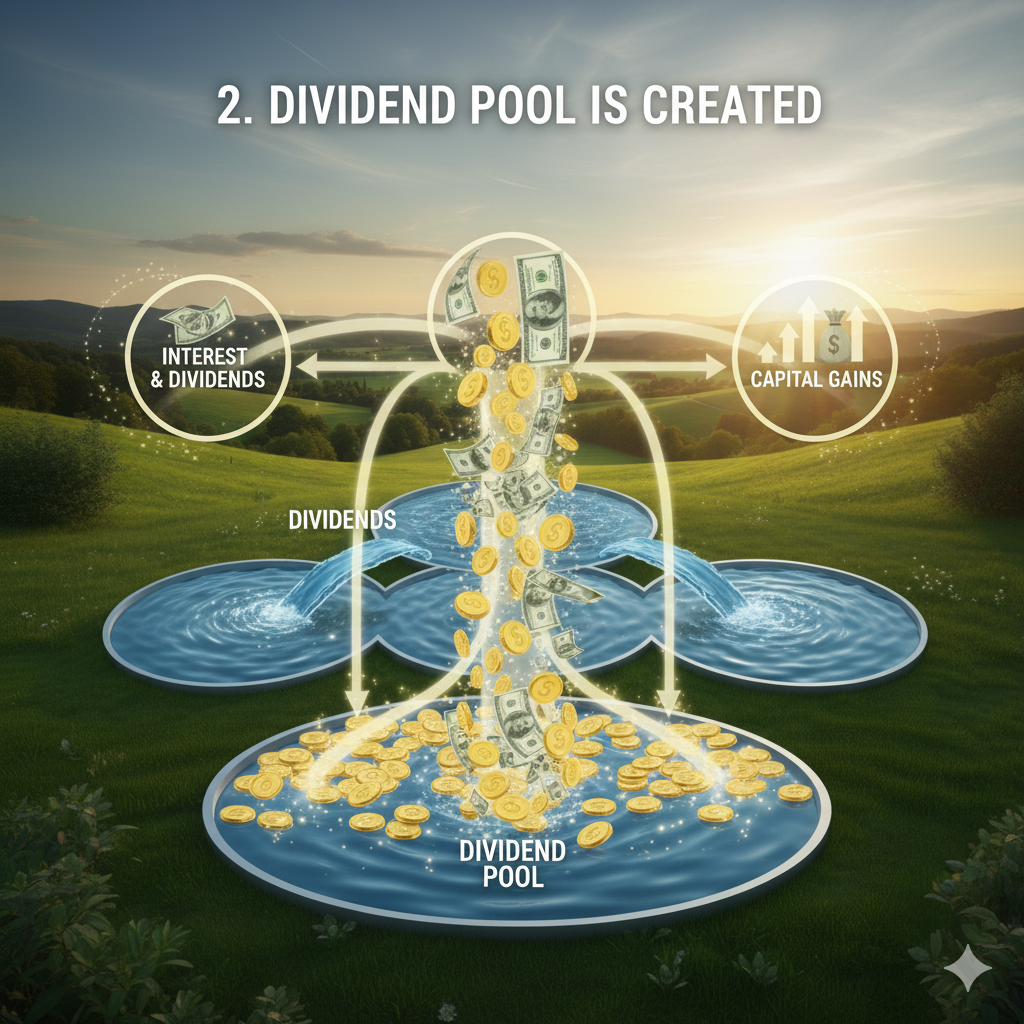
✅2. Dividend pool is created
All this income is added together and becomes a dividend pool for the fund.
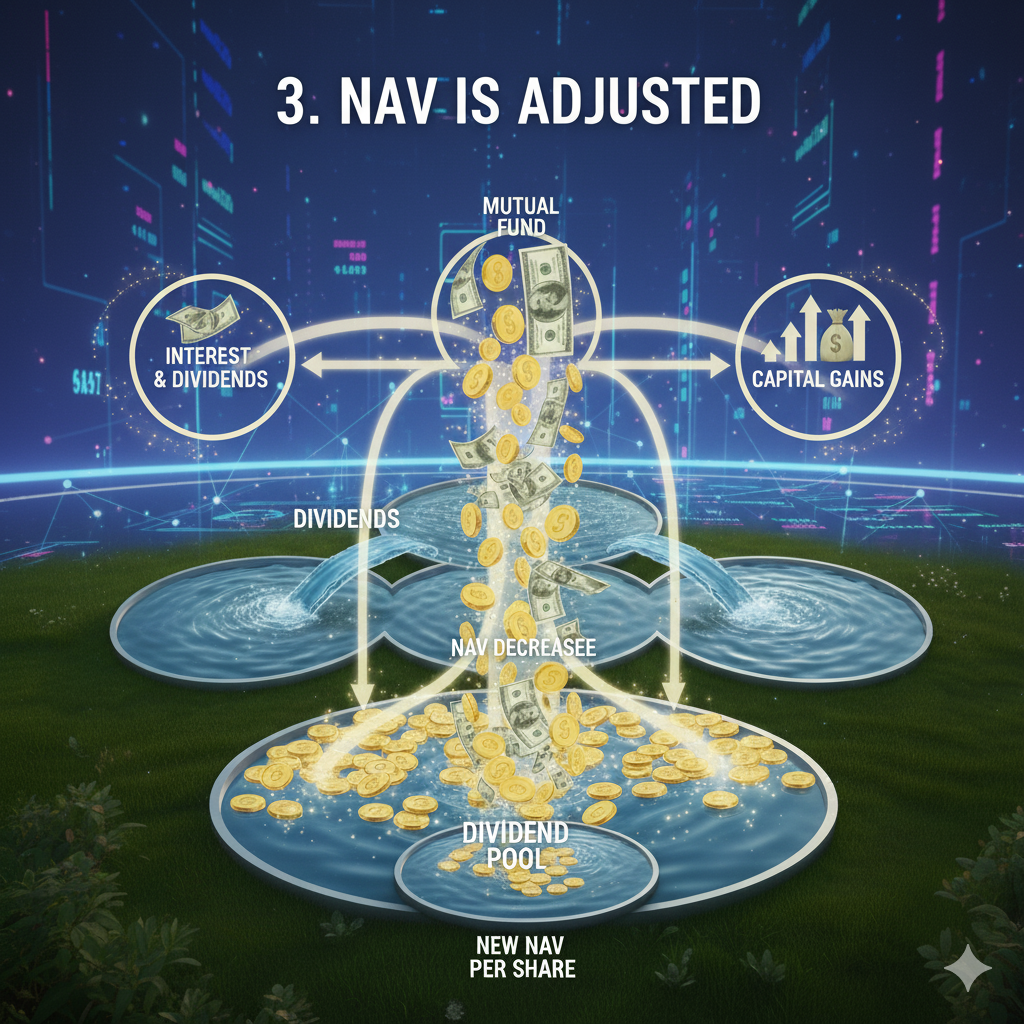
✅ 3. NAV is adjusted
Before paying dividends, the fund’s Net Asset Value (NAV) goes down by the dividend amount.
Example:
- NAV before dividend = ₹20
- Dividend declared = ₹1 per unit
- NAV after dividend = ₹19
This is normal — part of your investment is returned as cash.

✅ 4. Dividend is paid to investors
If you hold units of the fund on the record date, you receive the dividend.
Payment options depend on your chosen plan:

📌
Dividend Options
a) Dividend Payout
- You receive the dividend as cash directly to your bank account 🏦💵.
b) Dividend Reinvestment
- Dividend amount is used to buy more units of the same fund 🔄📈.
c) IDCW Option
Now called Income Distribution cum Capital Withdrawal — same functioning as dividend but with new SEBI terminology.
📝
Important Points
- Dividends don’t mean extra profit — they are paid from the fund’s own corpus.
- NAV always drops after dividends.
- Growth funds do not pay dividends — all profits stay invested to increase NAV.
📦
Simple Example
You hold 1,000 units of a mutual fund.
Fund declares:
- Dividend = ₹1 per unit
You receive:
- ₹1,000 credited to your bank account (if payout option).
- Or extra units worth ₹1,000 (if reinvestment).