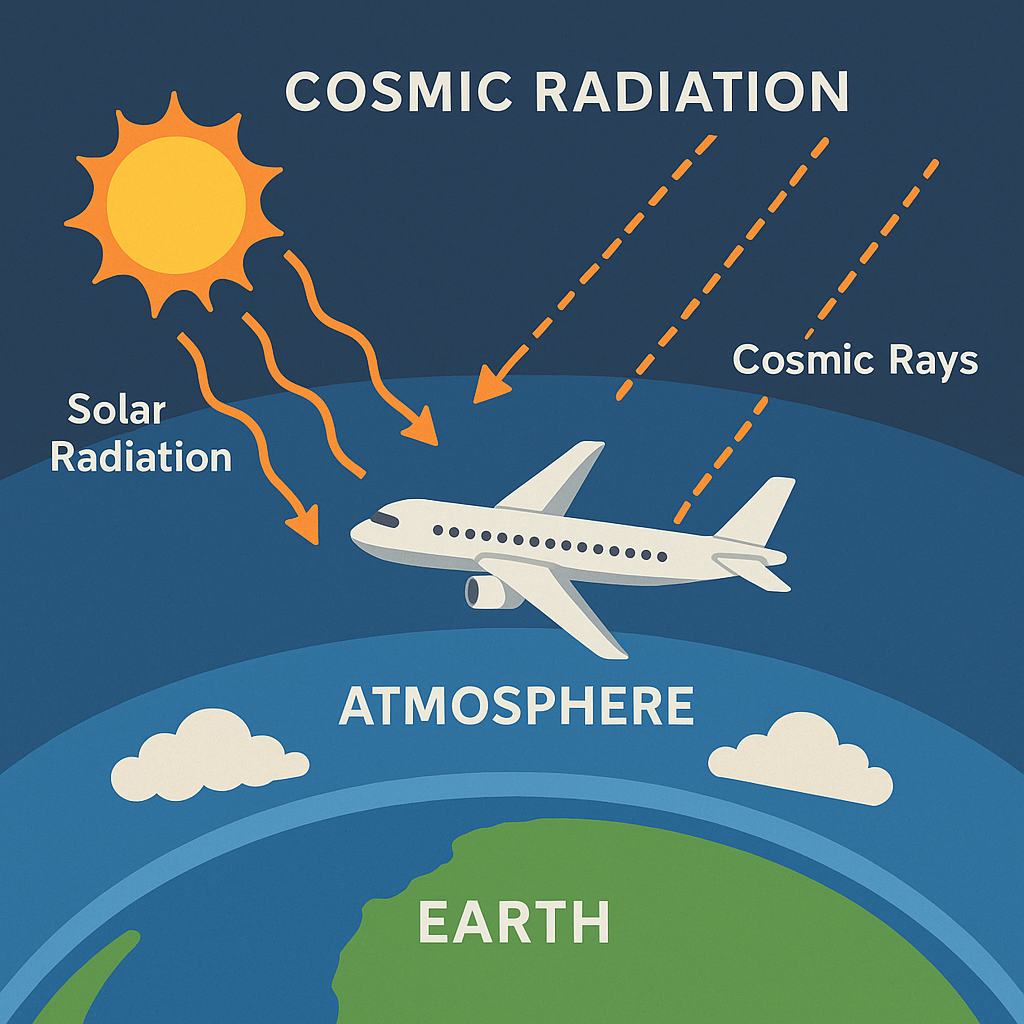
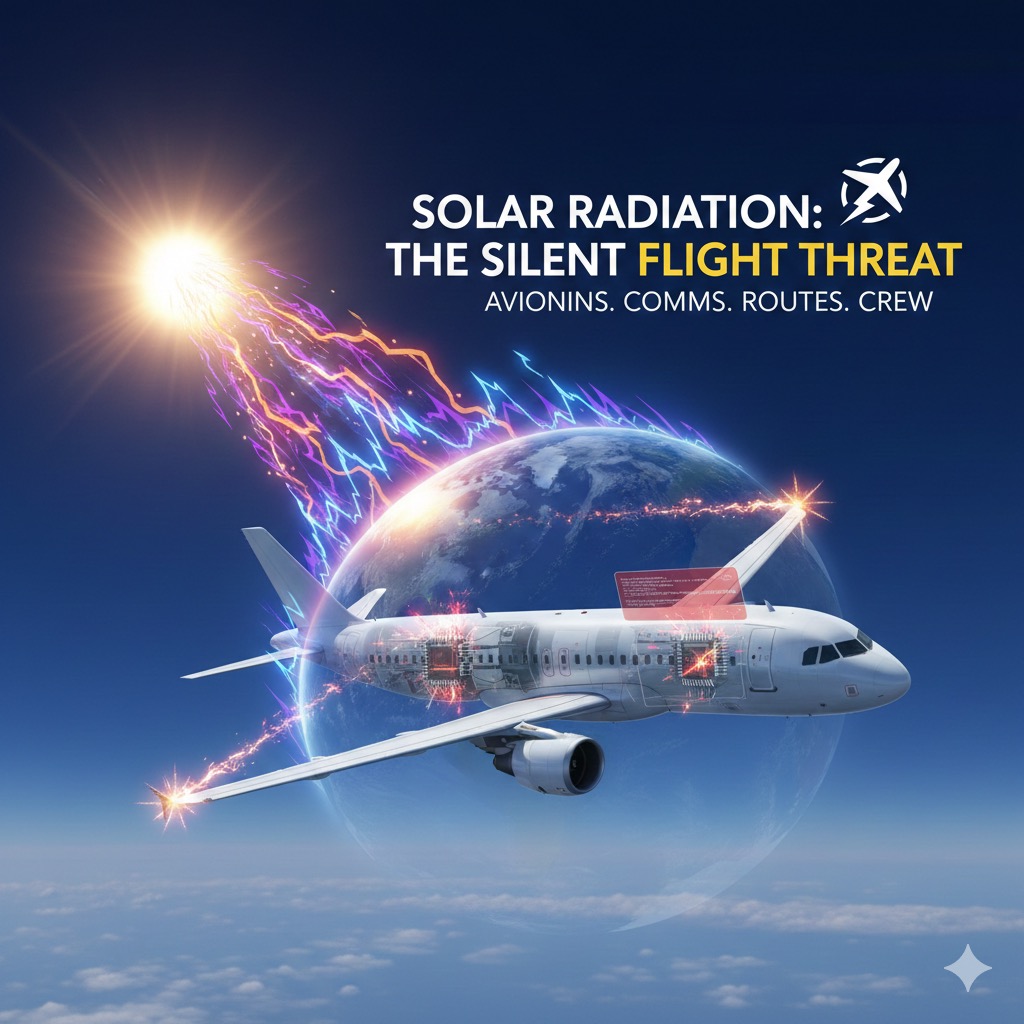
1️⃣ 🔥 Affects Aircraft Temperature & Performance
- Strong sunlight at high altitudes heats the aircraft skin 🌡️
- Hotter air = less dense atmosphere ⤵️
- Reduced lift 🪂
- Longer takeoff distance needed 🏁
- Slightly lower engine efficiency ⚙️
Hot day = poorer aircraft performance 🛫
2️⃣ ⚠️ Increases Radiation Exposure for Crew & Passengers
- Higher altitudes = less atmospheric protection 🧬
- Risks increase during:
- Polar flights 🌍❄️
- Solar storms or flares 🌋
Pilots & cabin crew are considered radiation-exposed workers in some countries 👨✈️👩✈️
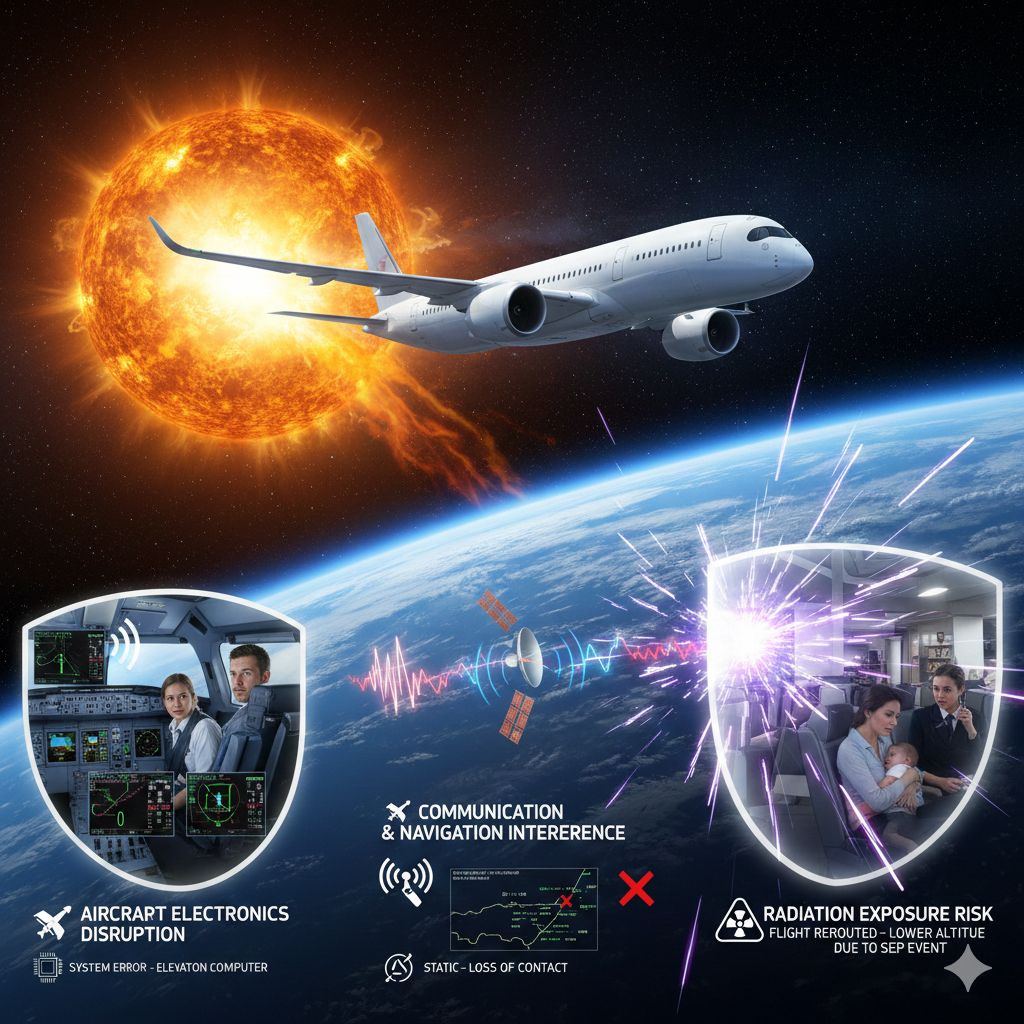
3️⃣ 📡 Navigation & Communication Disruptions
Solar activity like solar flares can cause:
- GPS errors 🛰️❌
- HF radio communication issues 📻📡
- Satellite system interference 🌐⚡
Polar routes sometimes reroute to avoid radio blackouts 🚫
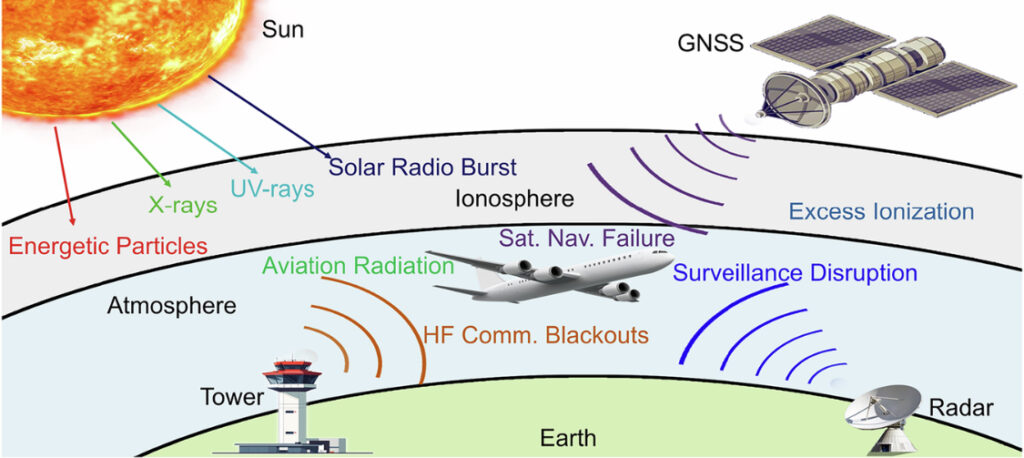
4️⃣ 🖥️ Avionics & Electronics Interference
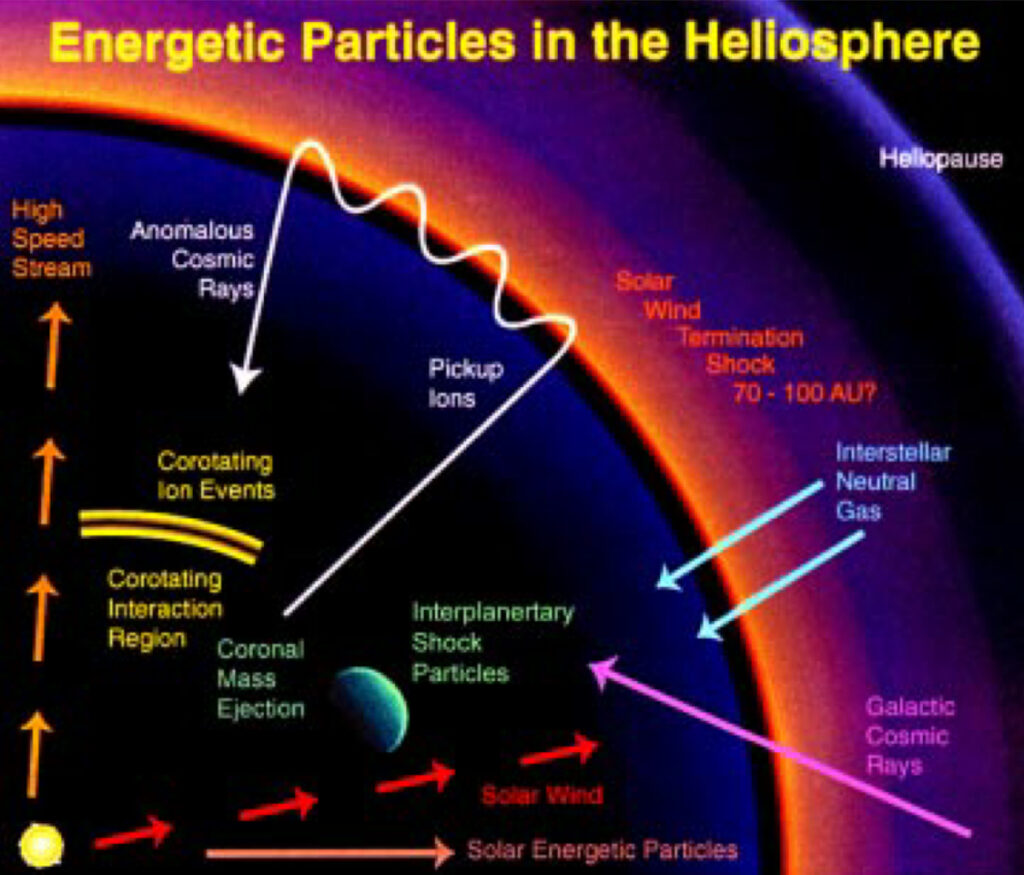
- Energetic solar particles can affect aircraft computers 🔋⚠️
- Modern aircraft are shielded but extreme events are monitored 👀
5️⃣ 🌪️ Weather & Turbulence Impacts
- Solar heating influences atmosphere dynamics 🌬️
- May increase:
- Temperature gradients 🌡️🔀
- Jet stream shifts ➿
- Clear-air turbulence 🌀