
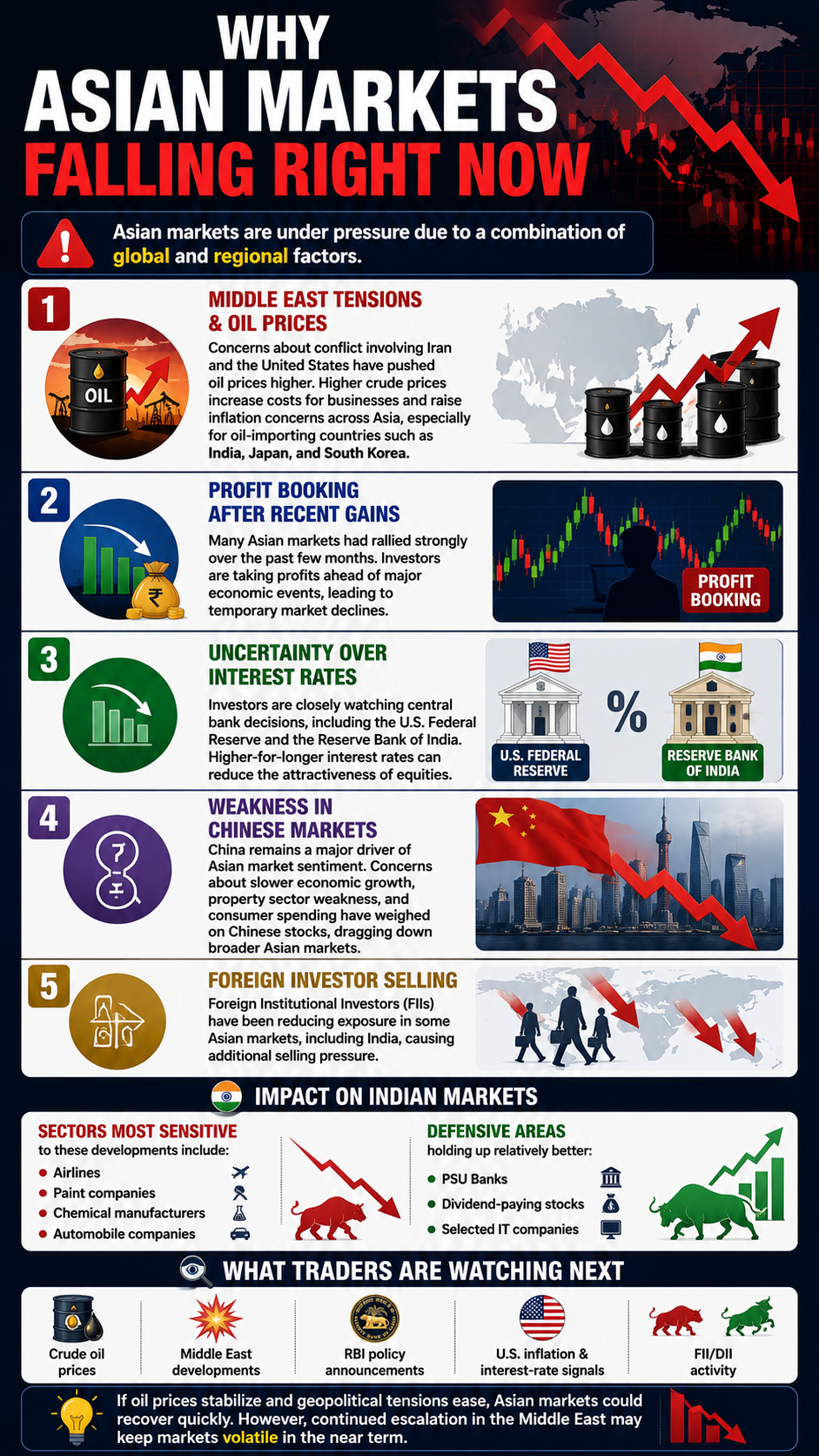
1. Middle East Tensions & Oil Prices
Concerns about conflict involving Iran and the United States have pushed oil prices higher. Higher crude prices increase costs for businesses and raise inflation concerns across Asia, especially for oil-importing countries such as India, Japan, and South Korea.
2. Profit Booking After Recent Gains
Many Asian markets had rallied strongly over the past few months. Investors are taking profits ahead of major economic events, leading to temporary market declines.
3. Uncertainty Over Interest Rates
Investors are closely watching central bank decisions, including the U.S. Federal Reserve and the Reserve Bank of India. Higher-for-longer interest rates can reduce the attractiveness of equities.
4. Weakness in Chinese Markets
China remains a major driver of Asian market sentiment. Concerns about slower economic growth, property sector weakness, and consumer spending have weighed on Chinese stocks, which often drags down broader Asian markets.
5. Foreign Investor Selling
Foreign Institutional Investors (FIIs) have been reducing exposure in some Asian markets, including India, causing additional selling pressure.
Impact on Indian Markets
Sectors most sensitive to these developments include:
- Airlines
- Paint companies
- Chemical manufacturers
- Automobile companies
Meanwhile, some defensive areas such as:
- PSU Banks
- Dividend-paying stocks
- Selected IT companies
have held up relatively better.
What Traders Are Watching Next
📌 Crude oil prices
📌 Middle East developments
📌 RBI policy announcements
📌 U.S. inflation and interest-rate signals
📌 FII/DII activity
If oil prices stabilize and geopolitical tensions ease, Asian markets could recover quickly. However, continued escalation in the Middle East may keep markets volatile in the near term.