
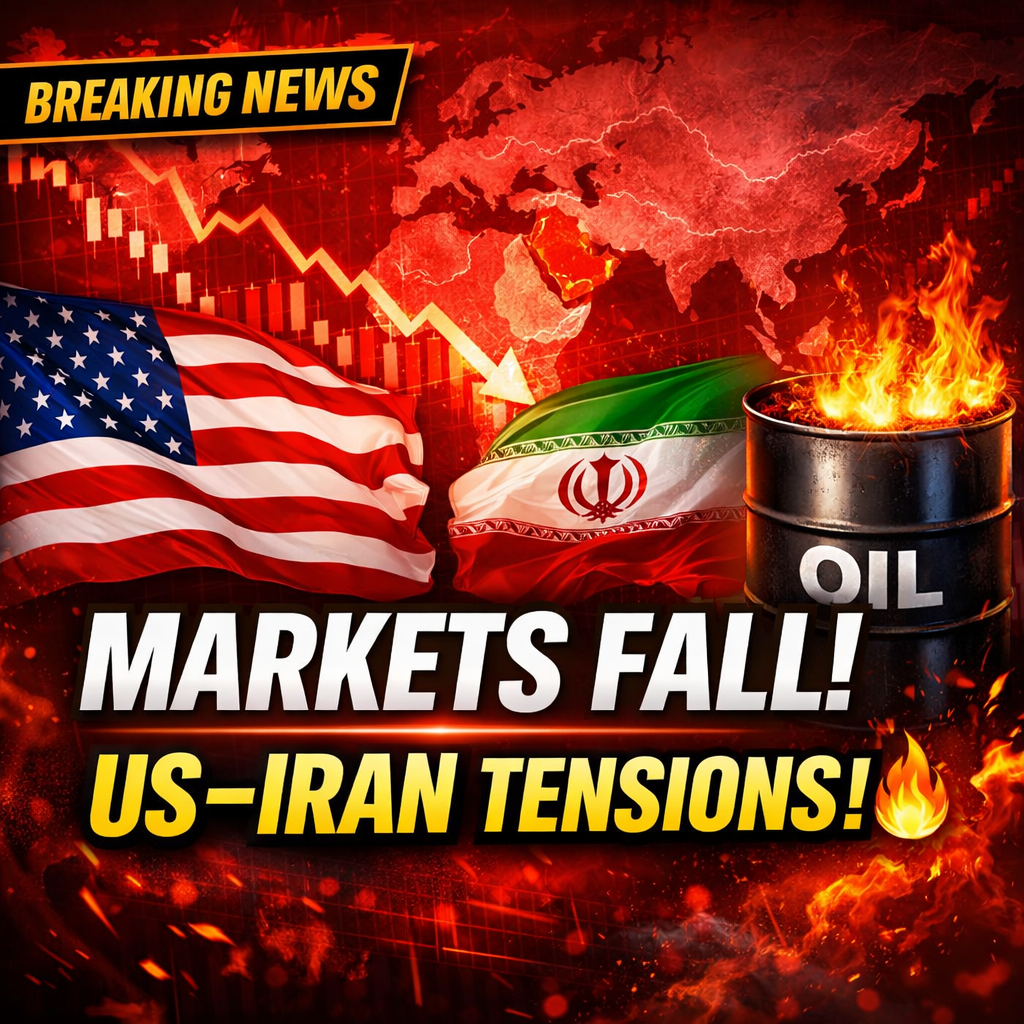
European stock markets moved lower on Monday as rising geopolitical tensions between the United States and Iran unsettled investor sentiment and triggered a broad market sell-off.
The downturn followed a sharp deterioration in diplomatic relations after the U.S. seized an Iranian cargo vessel near the strategically vital Strait of Hormuz. In response, Iran signaled retaliation and ruled out further peace negotiations, raising fears of prolonged conflict and disruption to global trade routes.
The pan-European STOXX 600 index fell करीब 0.8%, while major indices such as Germany’s DAX and France’s CAC 40 also recorded notable declines. Investors turned cautious as uncertainty around energy supplies and global economic stability intensified.
A key driver of market weakness was the sharp rise in crude oil prices, with Brent crude climbing over 5% to hover near $95 per barrel. The surge reflects concerns over potential supply disruptions, as the Strait of Hormuz—through which nearly 20% of the world’s oil passes—remains at the center of the conflict.
Sector-wise, travel and leisure stocks led the losses due to fears of rising fuel costs and reduced travel demand. Banking and automobile stocks also declined, reflecting broader economic concerns. In contrast, energy companies gained as higher oil prices boosted their outlook.
Market volatility is expected to persist as investors closely monitor geopolitical developments, oil price movements, and any potential diplomatic breakthroughs. The ongoing tensions not only threaten energy markets but also raise the risk of inflationary pressures and slower economic growth across Europe.
Overall, the situation underscores how geopolitical conflicts can quickly ripple through global financial markets, influencing investor confidence and sector performance.